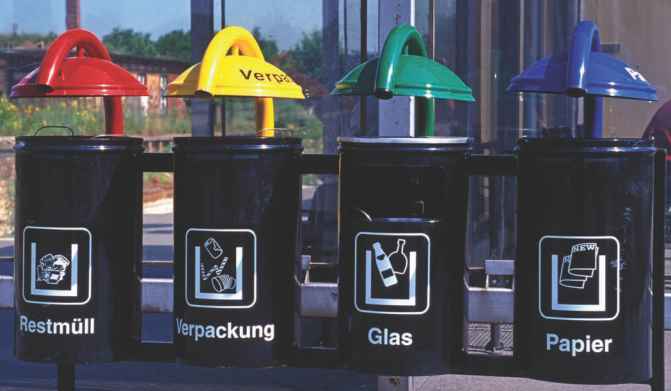
You may know about Germany’s evolved approach to trash disposal – they are world leaders in large-scale recycling and composting programs – and in practice, it’s a work of art. Germany makes it easy for every household to be almost zero-waste – and the whole society is committed to that principle, which means you either adopt it, too, or accept the scorn of the locals who see you pitching things that can be recycled or reused! It’s a bit hard to get used to at first, but once you do, there’s no going back. To start, every household has, or has access to, four ‘trash’ cans:
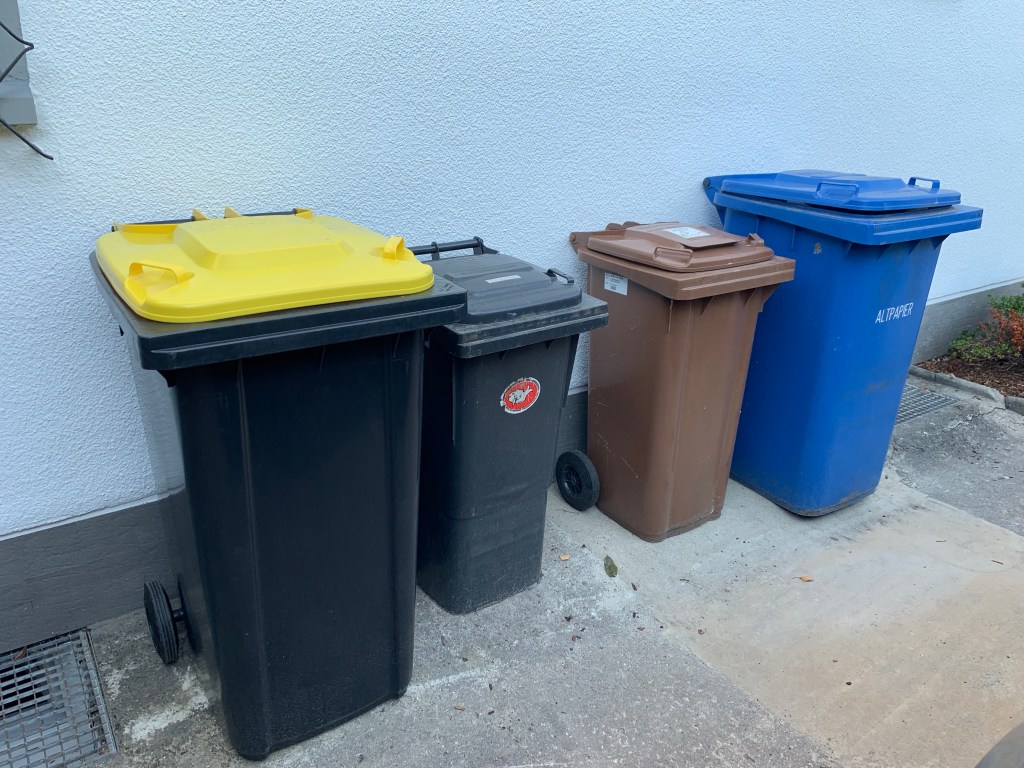
Plastic waste, ‘rest of trash’, organic waste, paper waste 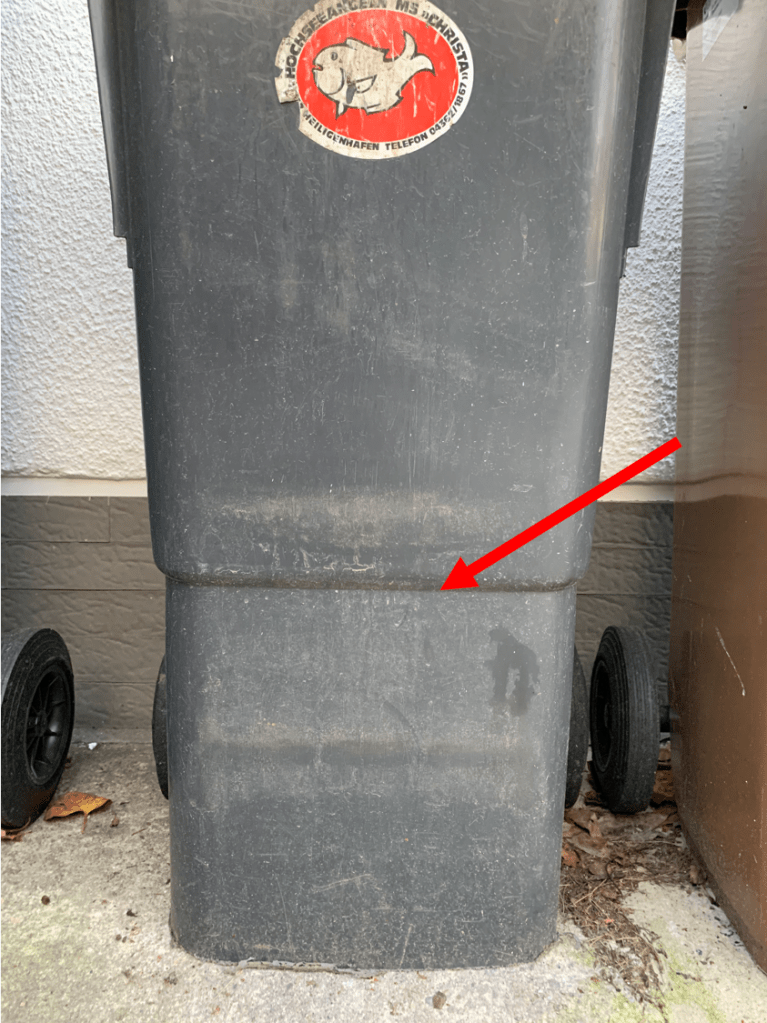
False bottom on the ‘rest of trash’ – the can isn’t as deep as it looks! 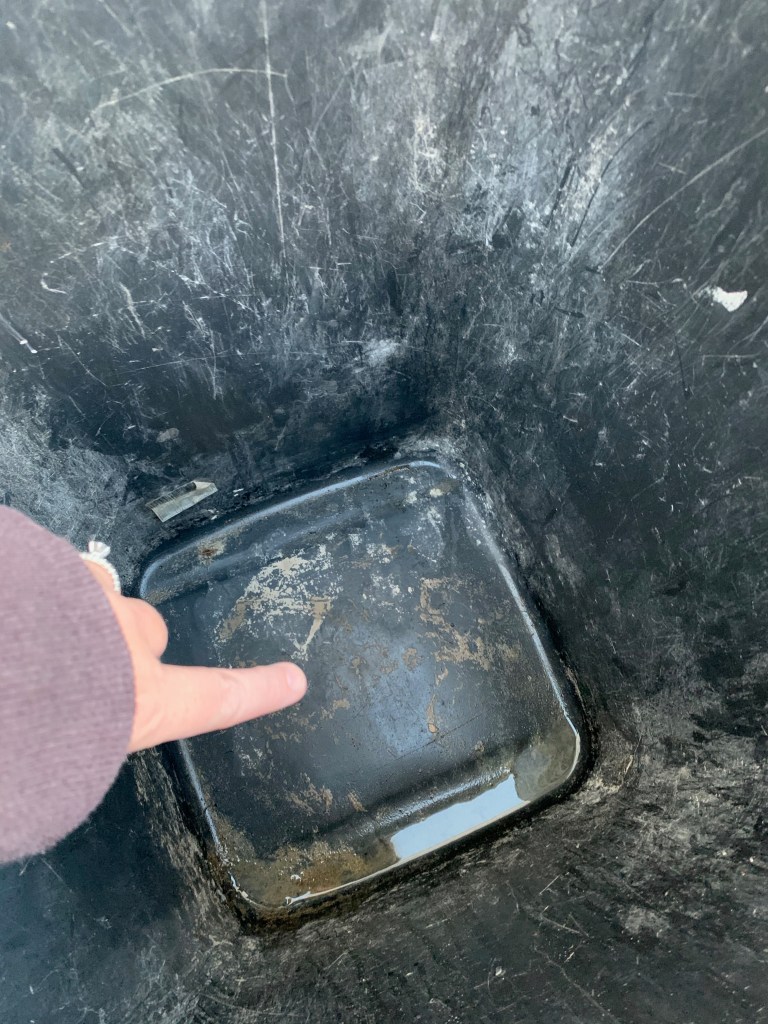
Inside view of the ‘rest of trash’ can – picked up every other week – everything else is recycled
Each of these trash cans is smaller than any I ever had in the U.S. – and they aren’t picked up every week. Almost all household waste is recycled – there’s a bin for compost (added to the community compost pile), one for paper (cardboard and newspapers, sure, but you’re even expected to pull paper off of food packaging, envelopes, wrappers, etc), and one for plastic (almost all plastic – including any plastic packaging like food wrap or envelope windows). Trash that isn’t recycled is the smallest can – Matt and I have nicknamed it ‘rest of trash’ – it’s only picked up every other week – and they even fill in the bottom of that small can so that you only get the top half or so for your trash!
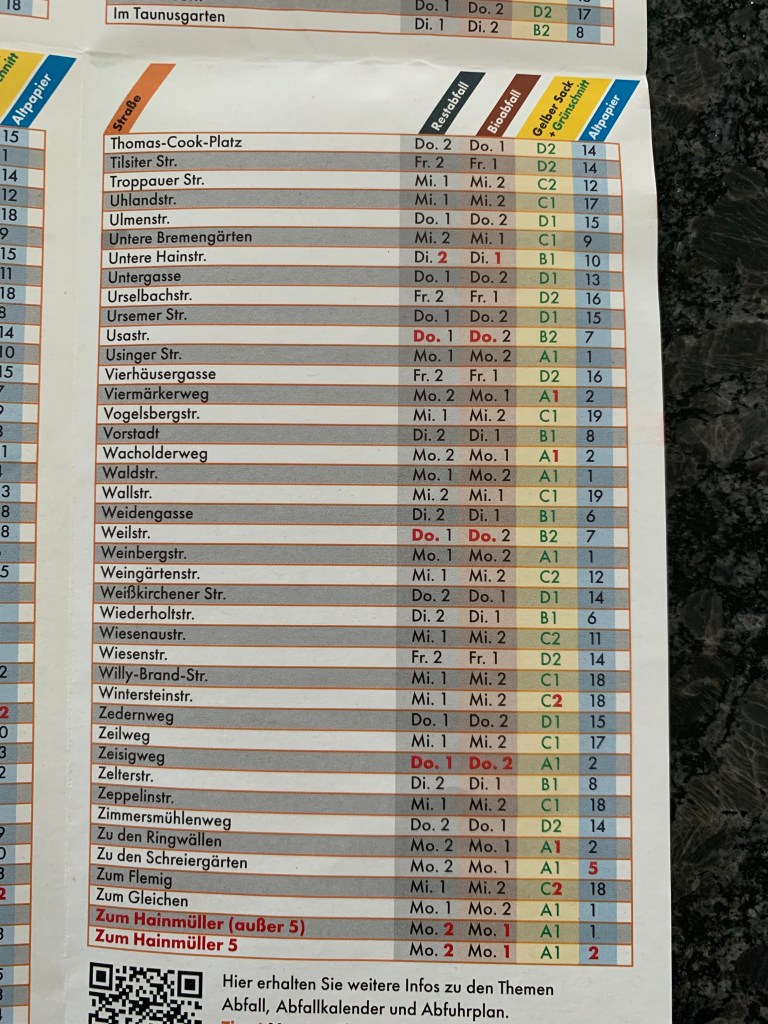
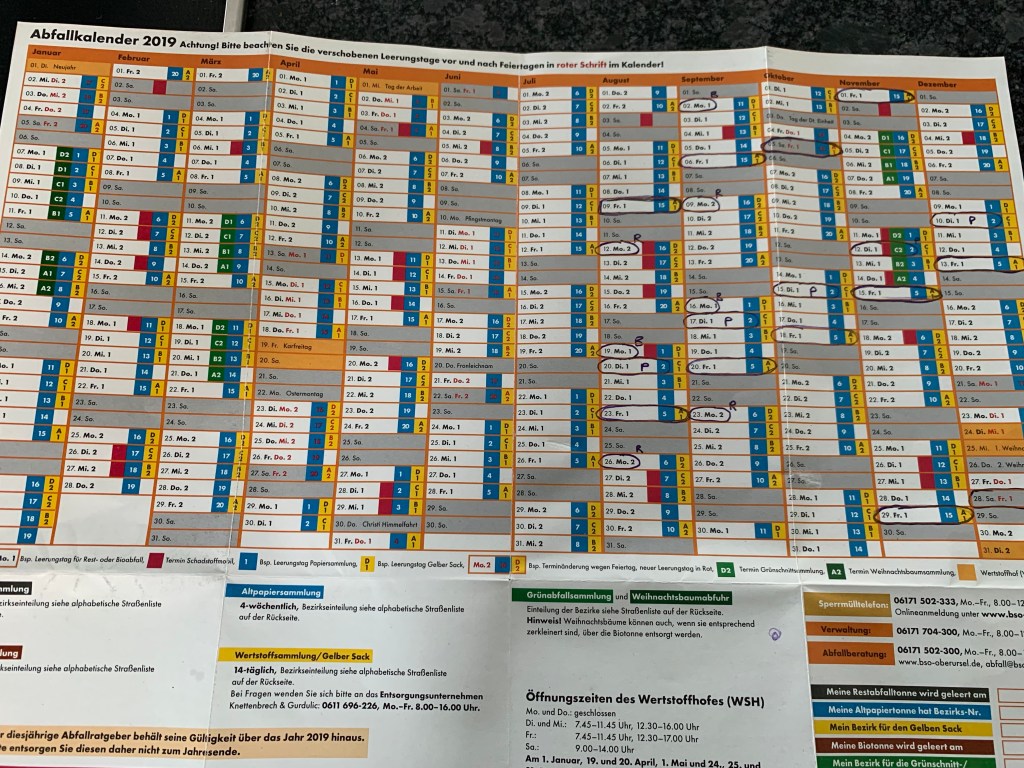
Each household receives a friendly neighborhood trash schedule so you can remember when to put each bin out – it makes my brain hurt to read it, but after a few weeks you get used to the pattern:
There are special places to dispose of glass and batteries. On nearly every street or nearby corner, you find glass recycling bins (different bins for brown, green, and clear/white glass), and battery recycling is usually in grocery or hardware stores:
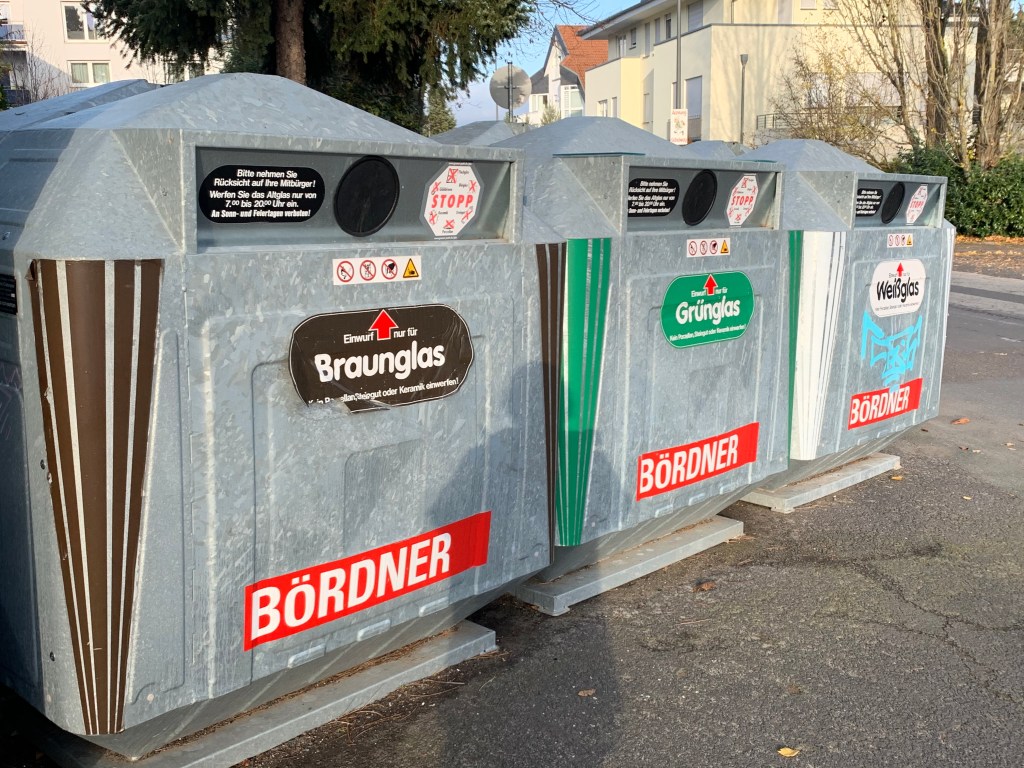
Glass Recycling Station on our block – brown, green, clear glass 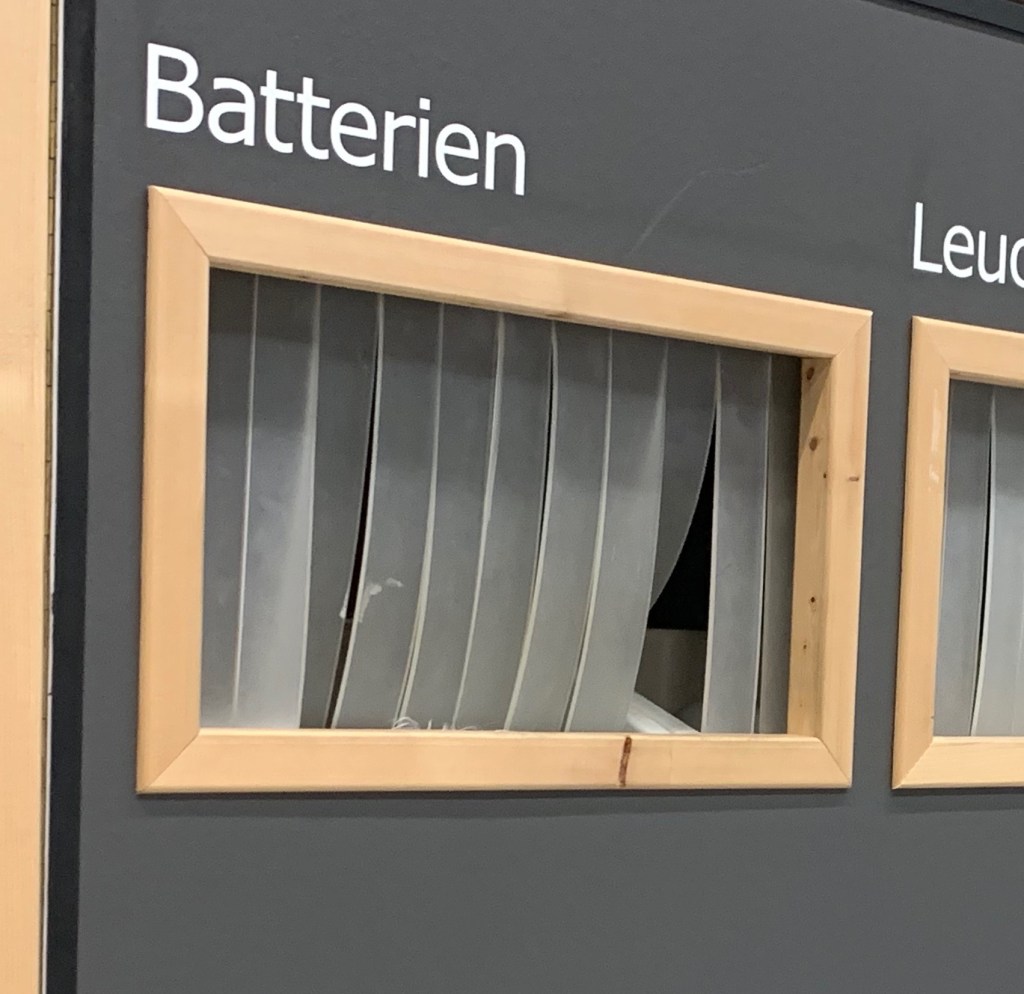
IKEA’s Battery Recycling Station
It’s great to see the results – the streets here are extremely clean, trash bins aren’t overflowing, restaurants give out very few ‘extras’ like napkins, plastic utensils are simply not a thing, and stores sell a very limited supply of disposable items. On grocery store shelves, there is literally one package of styrofoam cups, one 20-pack of paper plates, and zero aluminum pans – no matter which store you shop in – so people are conditioned to use non-disposable items no matter what they are doing.
It is a fantastic system, but man, it is a system!! I’m telling you, though, once you start recycling everything it becomes so hard to throw the tiniest thing away. For one, if you ‘cheat’ too often by putting recyclables in ‘rest of trash’ – your ‘rest of trash’ bin gets filled up so fast you end up having to store bags of trash for the next 2-week cycle. Gross!! And now when we travel to other countries – even right next door – we are appalled at how much we end up throwing away that could be reused or recycled.
It’s easy to see why Germany gets impatient with countries that don’t seem to care as much or try as hard when it comes to sustainability. Likewise, it’s easy to see why, without the proper systems in place, other countries struggle to implement successful recycling programs. Kudos to Germany for both setting people up for success, and for having a society that cares enough to actually follow through!
 Newmans in a New Land
That is pretty amazing!!! I filled a garbage can today of just old Christmas cards:)
LikeLike