Great news – Matt’s trip to Germany was a success and he now has his work visa in hand!! I could go on and on about all the steps we had to take to make this happen, but suffice to say that it involved questions like ‘on your marriage license, why did the official sometimes write in all capitals and other times, used lowercase?’ and ‘why is your wife’s name never spelled the same on any of these official documents?’. He also had to be opportunistic about German bureaucracy by seeking out known ‘friendlies’ in certain town halls to increase our chances of ‘winning’ a work visa. In short, this trip was everything Matt pretty much hates.
To pass the time and to make the trip more entertaining than arduous, we made lots of fun of how serious, direct, and no-nonsense German bureaucracy is, and yet how fun its words can be. Examples:
Rathaus
What I pictured:

What Rathaus means = Town Hall
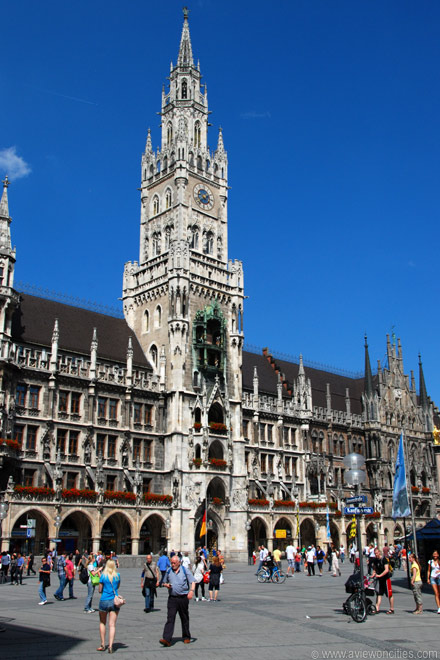
When I learned that Rathaus means Town Hall, I immediately thought of the amazing one that graces Munich’s central square, featuring an historic glockenspiel:
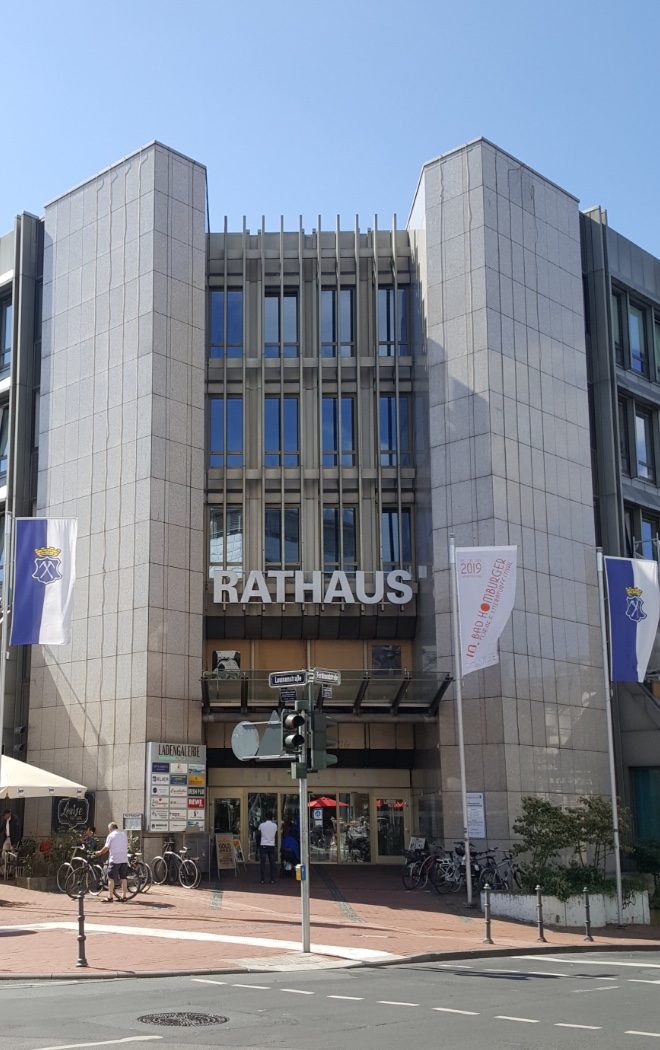
In reality, our neighborhood Rathaus resembles a cross between a Marshall’s and a bank:
Next, we have Burgermeister, which turns out is not this guy:

No, a Burgermeister is not a burger master…or a master burger…or anything like that. If you were picturing a person like this, you’d be closer:

Any guesses? That’s right, Burgermeister means mayor! And he is the lovely person who signed my husband’s work visa so that we can get our packing boxes back out and continue the move.
If you’re interested, here’s what the work visa looks like (sorry I had to white-out all the good stuff, wouldn’t want someone to copy it and get to masquerade as us for the next two years):
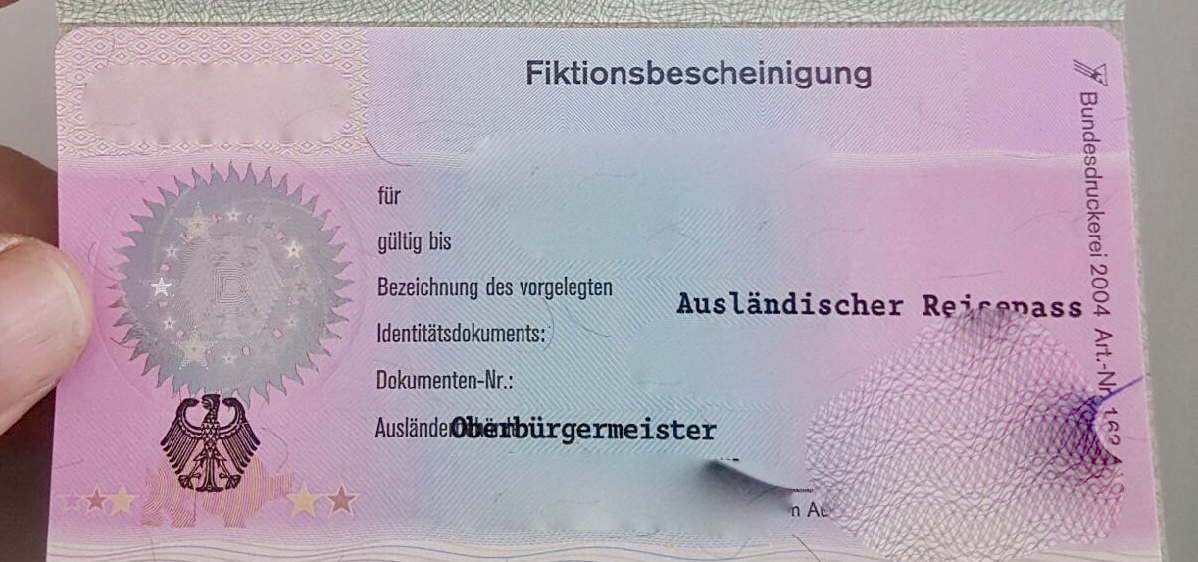
Any eagle-eyed readers notice anything off about this official-looking document? Fiktionsbescheinigung? What the hell is that doing on there? People tell me German is so easy to understand because it’s just a bunch of English words strung together with no spaces…if that’s true, I’m wondering what the Fiktional part of this official document is.
And finally, one last set of great German government terms – Auslander, and its relatives Auslandischer and Auslanderbehorde. Auslander means Outlander, or Immigrant, and I love so many things about that word. Outlander just happens to be one of my very favorite book series and TV series, featuring what I think is one of the hottest love stories of all time, despite (or perhaps because of) being from the genre ‘science fiction-time travel-romance’. And something about being called an Outlander – its directness, its specificity – makes it somehow OK to be from elsewhere, like we don’t have to pretend we’re something we’re not. We will be Outlanders, and we will own it.

It just gets better when Auslander gets modified…I like to picture one of these people – the Auslandischer – dishing out immigrants like plates of spaghetti on a dining table. Whereas the Auslanderbehorde is hoarding the immigrants – keeping them behind closed doors with the rats at the town hall. Neither of these interpretations is far from the truth – both have to do with the granting, or not, of work and residence visas. Believe it or not, there’s no great picture for that – mostly political cartoons – so insert your own German version of that visual [here].
Anyway, way to go, Matt! You are my favorite Wildpinkler (look it up).
 Newmans in a New Land